Reading a 60-page report shouldn't take hours. With the PDFPilot4U AI PDF Summarizer, you can summarize PDFs online in seconds. Whether you're reviewing research papers, business reports, legal contracts, financial documents, or technical manuals, our AI PDF summarizer extracts the most important insights instantly while preserving context and accuracy.
What Is an AI PDF Summarizer?
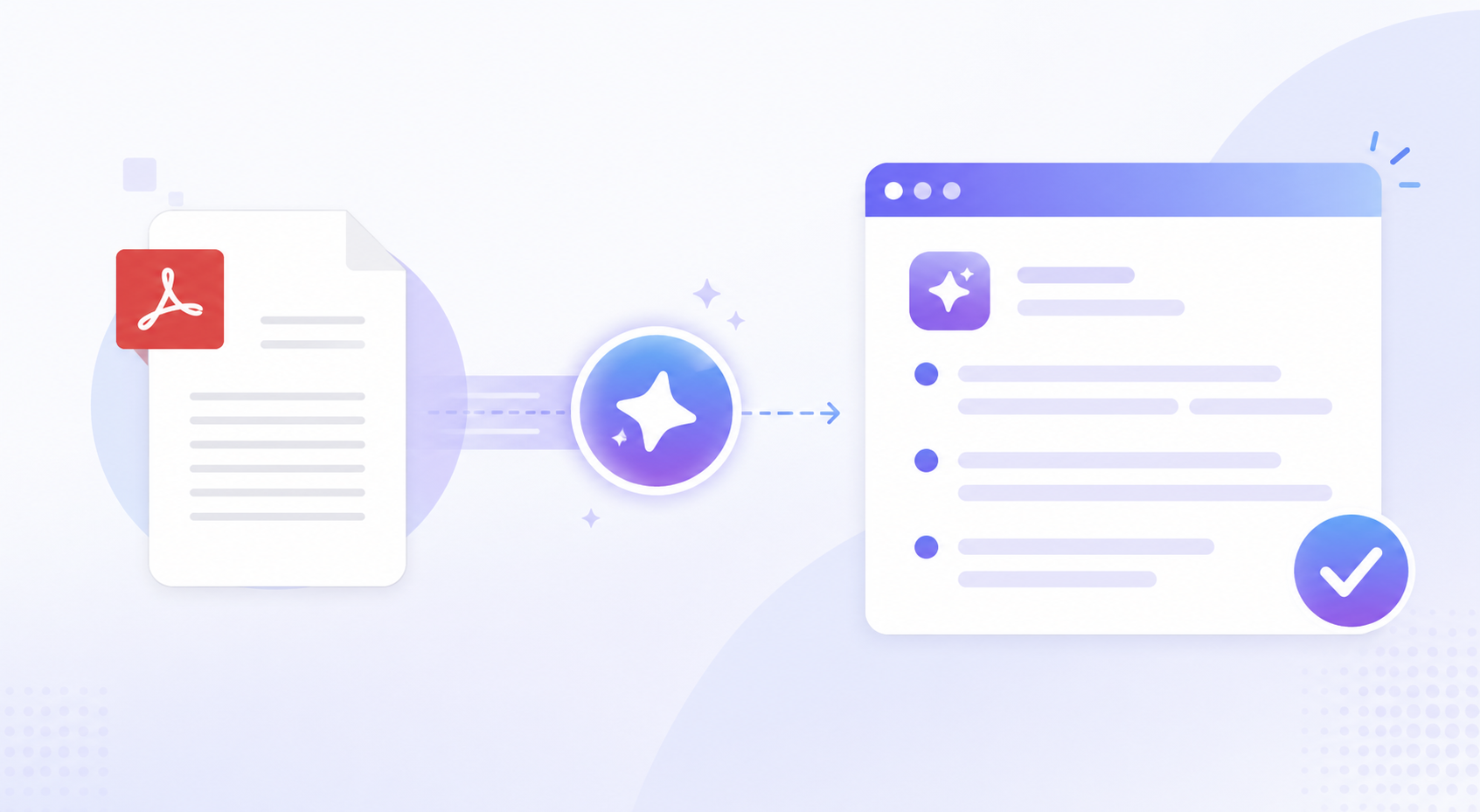
AI PDF summarization uses a large language model (LLM) to read the full content of a PDF and automatically produce a condensed, human-readable summary. Unlike pasting text into a generic chatbot, a dedicated AI PDF summarizer reads the document structure — headings, tables, bullet points, footnotes — and distils the most important information with full context awareness.
Benefits of Using an AI PDF Summarizer
Time: A skilled reader takes 3–5 minutes per page. A 40-page document equals 2+ hours. AI does it in under 5 seconds.
Accuracy: Human readers skim and miss nuances, especially in dense technical or legal language. AI reads every word, every time.
Scalability: If you work with multiple documents daily — invoices, contracts, research papers — manual review doesn't scale. AI does.
Consistency: AI applies the same level of attention to every document, regardless of volume.
Key Features of PDFPilot4U AI PDF Summarizer
- Supports PDFs up to 1,000 pages
- Fast AI-powered summaries
- Multiple summary formats
- Secure document processing
- Ask follow-up questions
- Works with PDF, DOCX, PPTX and XLSX
- Copy or download summaries instantly
How to Summarize a PDF with AI Using PDFPilot4U
Go to PDFPilot4U: Visit pdfpilot4u.com and select AI Summarizer from the AI Tools section, or drop your file in the homepage quick-drop zone.
Upload Your PDF: Drag and drop or browse your files. Supports up to 1,000 pages per session. Also accepts DOCX, XLSX, and PPTX.
Choose Your Summary Style: Select a brief overview (1–2 paragraphs), a structured section summary, or a bullet-point takeaway list.
Review and Use: Your summary appears in seconds. Copy it, download it, or ask follow-up questions using the Ask PDF chat feature — all in one session.
How to Summarize a PDF Online with AI
- Research papers: Extract methodology, results, and conclusions without reading every section.
- Legal contracts: Identify key clauses, obligations, and risk factors in minutes.
- Financial reports: Pull revenue figures and strategic priorities from dense financial language.
- Technical manuals: Distil long product guides into actionable steps.
- Business proposals: Understand scope, pricing, and deliverables at a glance.
- Medical reports: Surface key diagnoses and findings for review.
Who Can Use an AI PDF Summarizer?
- Students
- Teachers
- Lawyers
- HR Professionals
- Business Analysts
- Researchers
- Finance Teams
- Healthcare Professionals
Why Choose PDFPilot4U AI PDF Summarizer?
- Lightning-fast processing
- High accuracy
- Secure uploads
- AI-powered insights
- Interactive Ask PDF
- No technical knowledge required
- Works directly in your browser